What to Expect in the First Week After Hair Transplant
This guide explains what to expect in the first week after a hair transplant, from healing milestones to essential aftercare for safe, healthy recovery.
Post Author:
medicalhair
Categories:
Date Posted:
December 8, 2025
Share This:
The first week after a hair transplant is one of the most important phases of your recovery. Even though the procedure is minimally invasive, your scalp is healing, the grafts are stabilizing, and your body is adjusting to the surgical process.
Day 1: Immediate Post-Operative Period
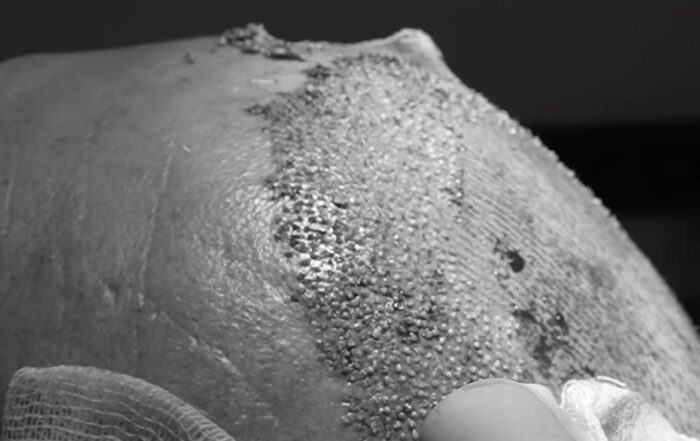
Once the procedure is completed, your scalp will feel tender and slightly numb. The recipient area (where grafts were placed) may appear red with tiny visible scabs. The donor area may feel tight or mildly sore.
You can expect:
- Mild swelling or pressure around the forehead or temples
- A bandage or dressing placed over the donor region
- Crusts around each graft
- Possible small blood spots
- Sensitivity when touching the scalp
Day 2–3: Sensitivity and Early Healing
This is when the scalp remains most delicate. The grafts are secure enough not to fall out with light contact, but still vulnerable to friction, scratching, or force.
Common experiences:
- Continued redness
- Mild soreness when bending forward
- Slight crusting in the recipient zone
- Tightness in the donor area
- Itching as the scalp begins to heal
What to do:
Sleep with your head elevated to reduce swelling. Use recommended aftercare products, and avoid touching or disturbing the grafts.
Day 3–5: Swelling May Peak
Swelling often moves downward due to gravity, sometimes giving patients a “puffy forehead” appearance. This is temporary and normal.
Typical symptoms:
- Forehead swelling that moves toward the eyes
- Itching as scabs begin to form
- Reduced soreness in the donor region
- Less tightness across the scalp
What helps:
Cold compresses applied to the forehead—not the grafts—can offer relief.
Day 5–7: Scabbing, Flaking, and Improved Comfort
By the end of the first week, most patients begin feeling significantly better. The scabs around the grafts begin to dry and flake off as healing progresses.
You may notice:
- Scabs starting to shed naturally
- Itchiness as the scalp regenerates
- A return to normal daily activities (light only)
- A cleaner, more natural appearance of the recipient site
You are allowed gentle washing by this stage. The key is to avoid picking or rubbing off scabs.
Pain Levels During Week 1
Pain is typically very mild. Most patients compare it to a sunburn or tight ponytail sensation.
Activities You Should Avoid in the First Week
To protect the grafts and ensure optimal survival:
- Avoid strenuous exercise
- Avoid bending or heavy lifting
- Do not scratch or pick at scabs
- Avoid hats unless your surgeon approves
- Avoid saunas, steam rooms, and hot showers
- Avoid alcohol and smoking, both of which slow healing
Most people return to desk work within 2–4 days, depending on comfort and visibility.
When to Contact Your Surgeon
While complications are rare, reach out if you experience:
- Excessive or worsening redness
- Persistent bleeding
- Increasing pain after day 3
- Pus, foul odor, or signs of infection
- Sudden loss of large clumps of grafts
- Severe swelling obstructing vision
Early intervention keeps minor issues from progressing.
Final Consideration
The first week after a hair transplant is full of small but important milestones. Redness, swelling, crusting, and itchiness are all normal signs that the scalp is healing. By the end of this period, most patients feel significantly more comfortable and confident about their results.
Understanding this timeline not only eases anxiety but also supports excellent long-term growth. With proper care and guidance, set the foundation for a strong, natural, and permanent result.
References
- Gómez-Zubiaur A, García-Morrás P, Hermosa-Gelbard Á, Vañó-Galván S. Localized Telogen Effluvium of the Donor Area After Hair Transplant Surgery in 12 Patients. Dermatol Surg. 2021;47(7):1023-1024. doi:10.1097/DSS.0000000000002783
- Guerrero-González GA, González-Martínez G, Valdez-Zertuche JA. Localized Donor Area Acute Telogen Effluvium following Follicular Unit Extraction: Key Trichoscopic Findings. Skin Appendage Disord. 2023;9(5):377-379. doi:10.1159/000531927
- Loh SH, Lew BL, Sim WY. Localized Telogen Effluvium Following Hair Transplantation. Ann Dermatol. 2018;30(2):214-217. doi:10.5021/ad.2018.30.2.21
References
- Gómez-Zubiaur A, García-Morrás P, Hermosa-Gelbard Á, Vañó-Galván S. Localized Telogen Effluvium of the Donor Area After Hair Transplant Surgery in 12 Patients. Dermatol Surg. 2021;47(7):1023-1024. doi:10.1097/DSS.0000000000002783
- Guerrero-González GA, González-Martínez G, Valdez-Zertuche JA. Localized Donor Area Acute Telogen Effluvium following Follicular Unit Extraction: Key Trichoscopic Findings. Skin Appendage Disord. 2023;9(5):377-379. doi:10.1159/000531927
- Loh SH, Lew BL, Sim WY. Localized Telogen Effluvium Following Hair Transplantation. Ann Dermatol. 2018;30(2):214-217. doi:10.5021/ad.2018.30.2.21