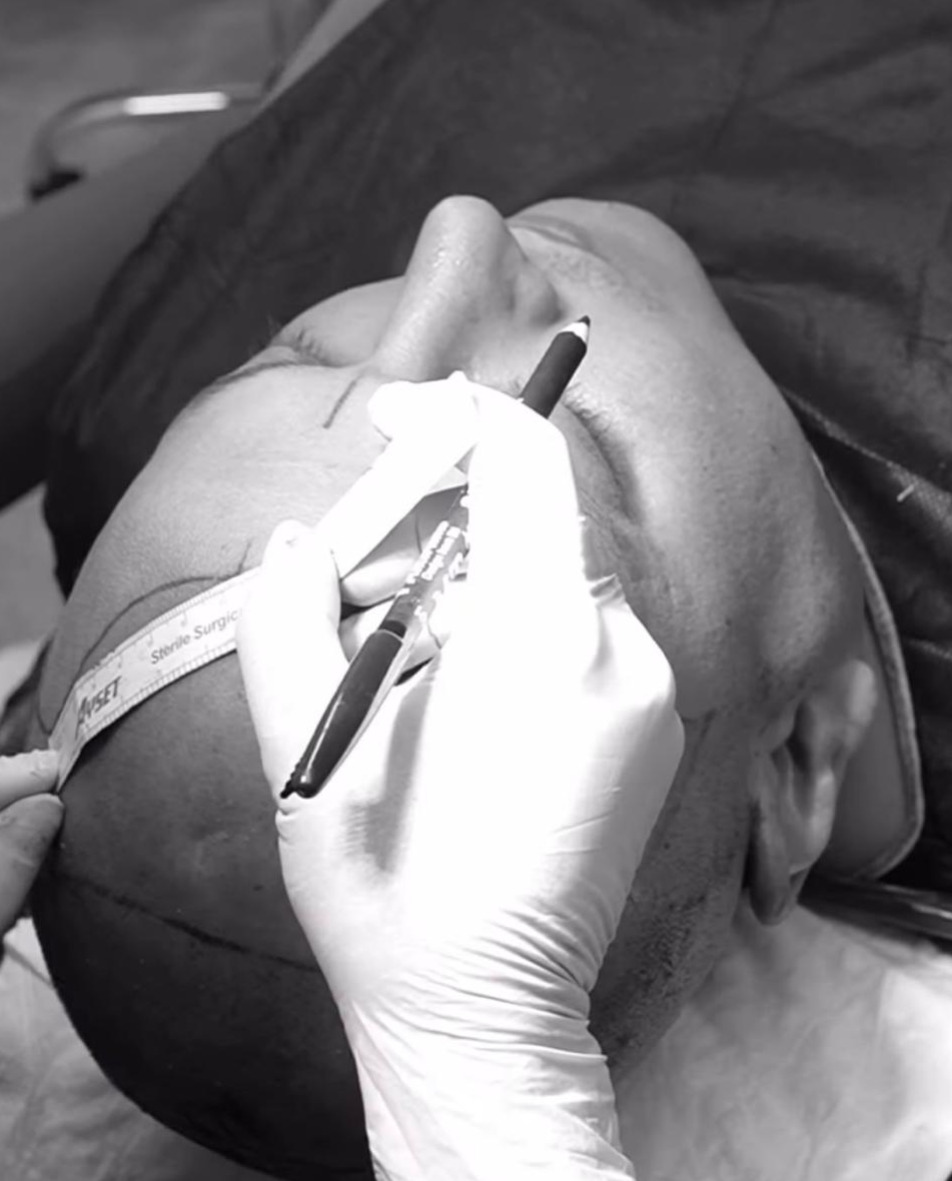
FUE Hair Transplant: Beginner Guide
This guide explains FUE hair transplantation, covering how the procedure works, its advantages, recovery expectations, and who may benefit most.
Post Author:
medicalhair
Categories:
Date Posted:
December 19, 2025
Share This:
Hair loss, especially when progressive or visible, can deeply affect self-esteem and quality of life. For many patients with androgenetic alopecia or other hair-loss conditions, a surgical solution offers the possibility of restoring natural-looking hair. Among techniques available today, Follicular Unit Extraction (FUE) has emerged as a leading method. This guide aims to explain in clear, patient-focused language what FUE entails, its benefits and limitations, how it works, and what patients should expect before and after surgery.
What Is FUE and How Does It Work
FUE is a minimally invasive hair-restoration procedure in which individual hair follicular units (FUs) are harvested from the “donor area” the back side the scalp) and then implanted into areas with thinning or baldness.
Unlike older techniques which harvest a strip of scalp tissue FUE uses small “punches” (usually between 0.8 and 1 mm in diameter) to extract FUs one by one.
This method minimizes scarring: instead of a linear scar (as seen in strip harvesting), FUE leaves tiny, dot-like marks that typically heal and become nearly undetectable especially once hair regrows.
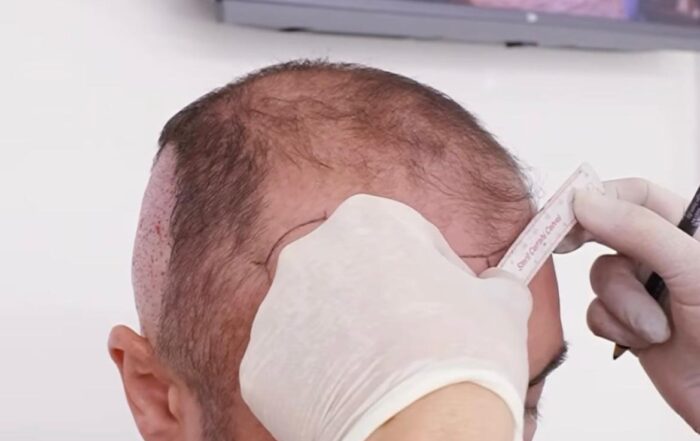
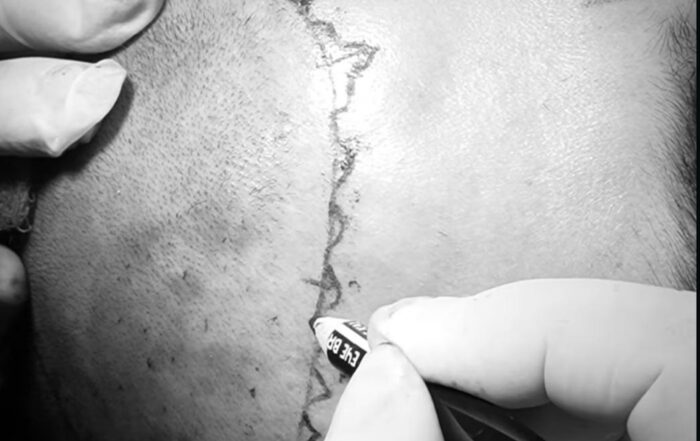
Because the follicles are placed individually, the surgeon can control graft angle, direction, density which helps create a natural hairline and integration with existing hair.
FUE is also versatile: besides scalp hair restoration in androgenetic alopecia, it can be used for other purposes (facial hair restoration, body-hair transplants, scar revision, even certain dermatologic conditions).
What are the Advantages
Minimal scarring and faster recovery: Because FUE does not remove a strip of tissue, there is no large linear scar; healing is typically faster.
Natural-looking results: Individual graft placement allows control over hairline design, density, and replicating natural hair growth.
Less post-procedural discomfort: Compared with older methods, patients often experience less donor-area pain and faster donor-area healing.
Versatility: FUE is useful not only for typical scalp hair restoration (e.g., male-pattern baldness) but also for facial hair, body hair, scar reconstruction, and more.
The FUE Process
1)Consultation & Planning
The surgeon assesses donor-hair quality, donor-area density and stability, the pattern and extent of hair loss, and patient expectations. Good candidacy is essential for lasting results.
2)Harvesting (Extraction)
Under local anesthesia, a micro-punch (≈ 0.8–1 mm) is used to extract individual follicular units.
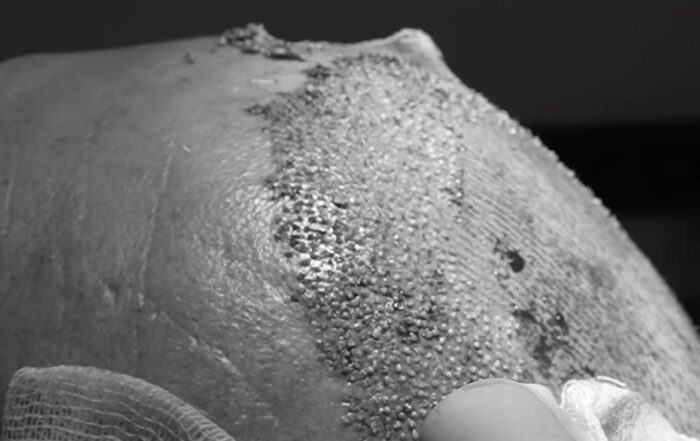
3)Channel Openning
Once the grafts are safely harvested, the surgeon meticulously creates microscopic channels in the recipient area to guide the angle, direction, and density of the transplanted follicles
4)Implantation
Tiny sites are made in the balding area to receive the grafts. The surgeon controls angle, depth, and density to mimic natural hair.
5)Postoperative Care & Healing
Healing is faster than with strip harvesting. Patients may return to many activities within a few days.
The transplanted hair often sheds within the first few weeks (so-called “shock loss”), this is normal and expected. New growth generally begins around 3–4 months after surgery.
Full results often develop over12 months (sometimes longer), as transplanted hairs enter their natural growth cycle.
Conclusion
FUE hair transplantation represents a major advance in hair-restoration surgery: with the potential for natural-looking hair, minimal scarring, relatively quick recovery, and high rates of patient satisfaction. However, it is not a “simple quick fix” success depends on careful patient selection, thoughtful surgical planning, meticulous technique, and realistic expectations.
At Medicalhair, our surgeons are ready to guide you through every step of your FUE hair restoration journey. If you consider treatment or want a personalized assessment, you can easily book a consultation with our team today.
References
- Jiménez-Acosta F, Ponce-Rodríguez I. Follicular Unit Extraction for Hair Transplantation: An Update. Actualización del método Follicular Unit Extraction (FUE) del trasplante de pelo. Actas Dermosifiliogr. 2017;108(6):532-537. doi:10.1016/j.ad.2017.02.015
- Kerure AS, Deshmukh N, Agrawal S, Patwardhan NG. Follicular Unit Extraction [FUE] - One Procedure, Many Uses. Indian Dermatol Online J. 2021;12(3):381-388. Published 2021 May 12. doi:10.4103/idoj.IDOJ_522_20
References
- Jiménez-Acosta F, Ponce-Rodríguez I. Follicular Unit Extraction for Hair Transplantation: An Update. Actualización del método Follicular Unit Extraction (FUE) del trasplante de pelo. Actas Dermosifiliogr. 2017;108(6):532-537. doi:10.1016/j.ad.2017.02.015
- Kerure AS, Deshmukh N, Agrawal S, Patwardhan NG. Follicular Unit Extraction [FUE] - One Procedure, Many Uses. Indian Dermatol Online J. 2021;12(3):381-388. Published 2021 May 12. doi:10.4103/idoj.IDOJ_522_20